The Practitioner Realm
Foundational best practices for changework, therapy, and disciplined self-work
The Practitioner Realm forms the person who applies methods.
Before techniques, protocols, or specialisations, effective work depends on practitioner qualities: intent, perception, ethical restraint, rapport, and responsibility.
This Realm exists to train those qualities deliberately.
It is suitable both for those working with clients and those doing serious work on themselves.
This is not theory.
It is not personality development.
It is the discipline of becoming a reliable practitioner.
*Includes Certification of Completion

Watch the Introduction
Who this Realm is for
- Aspiring therapists, coaches, or changeworkers
- Practitioners who want stronger foundations
- Those doing serious internal work on themselves
- People who want discipline rather than inspiration
- Those willing to be trained in restraint and responsibility
Who this Realm is not for
- People seeking quick confidence or validation
- Those collecting techniques without self-reflection
- Those unwilling to examine their intent or impact
- Those seeking status rather than competence
If you are seeking comfort, certainty, or inspiration, this is not the right place.
What You Will be Trained to Develop
This Realm focuses on practitioner qualities that quietly determine whether any method works at all.
Training emphasises perception, intent, and ethical clarity rather than performance or personality.
Core competencies include:
- Practitioner intent and internal orientation
- Rapport without manipulation or over-identification
- Presence, containment, and attentional stability
- Ethical boundaries and scope awareness
- Responsibility for impact, not just intention
- Working without projection or rescuing behaviour
These capacities apply equally to client work and self-work.
Structure and Commitment
This Realm is designed to be foundational, not fast.
Progress depends on repetition, reflection, and correction — not consumption.
Structure includes:
- 20 Structured lessons on practitioner foundations
- Guided reflection exercises
- Practical self-application tasks
- Ongoing emphasis on integration into daily behaviour
Important:
These elements exist because practitioner qualities cannot be rushed or simulated.
Lessons include
- The Role of the Multidimensional Practitioner
- The Six Universal Attributes
- Intent
- Intuition
- Confidence
- Faith
- Rapport
- Alignment
- Preparing Yourself Before Any Work
- The Self-Work Loop
- The Client-Work Loop
- Emotional Stability
- Subconscious Communication
- Abreactions and Safety Protocols
- Ethical Alignment
- The Rules of Practice
- Daily Practitioner Practices
- Practitioner Evolution
- Bringing It All Together
- The Practitioner Identity
- Final Commitment
Practices and Discipline
The Practitioner Realm introduces disciplined practices that reduce unconscious interference in changework.
Practices are designed to:
- Reveal unconscious intent
- Strengthen internal alignment
- Reduce overreach and projection
- Stabilise practitioner presence
These are not rituals or performances.
They are corrective practices that shape how you show up — with others and with yourself.
Investment
This Realm is a complete formation within its domain.
Enrollment is a commitment to finish what you begin and to practice within ethical boundaries.
Investment: £300
Access: Online portal (instant access)
Format: Self-study Video Lessons with occasional live Zoom sessions
What is Included?
- Full online training lessons and materials
- Protocol guidance and best practices
- Certification upon completion (see below)
- Lifetime access
- Online Support
Certification for this Realm
Completion of the Practitioner Realm grants Certification of Completion.
This confirms that you have completed the full formation requirements of this Realm and engaged with the material as designed.
This certification:
- Recognises foundational practitioner training
- Signals ethical and professional orientation
- Does not authorise client-facing practice on its own
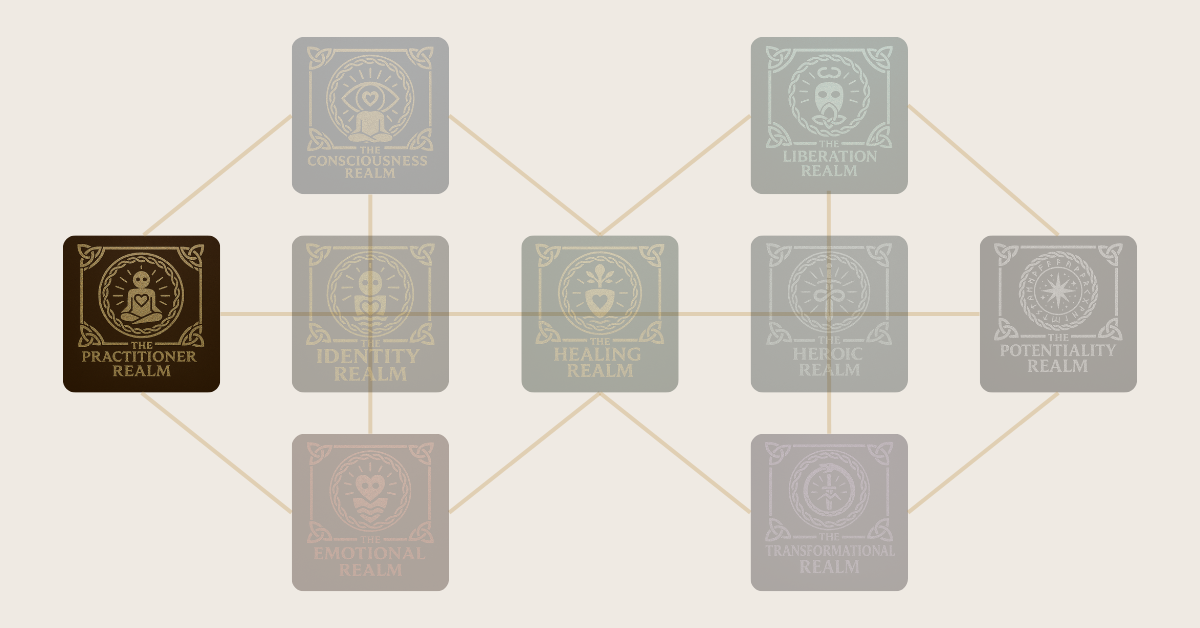
The Practitioner Realm forms the ground upon which other practice-authorising Realms build.
Relationship to Boundless: The Nine Realms
This Realm gives you real capability.
Boundless: The Nine Realms gives you the full path – foundations, practitioner certifications, and the capstone Potentiality work in one coherent journey.
If you can already feel this work is more than “just another course,” explore the full Boundless path:
Enter the Practitioner Realm
Enrollment signifies willingness to engage in disciplined self-reflection, follow practices as designed, and take responsibility for how you apply what you learn.